Transparency in our coffee processing/preparation operations has always been important to me.
I still remember, when I started in the world of coffee, the difficulty I had in visiting a roasting workshop worthy of the name in Quebec. Not a small roaster in the middle of a bistro but a real coffee shop, focused on roasting and not on sandwiches. Well no roaster had allowed me to tour their operations. I won't name them. And when I asked them questions about the composition of their blends, he replied with a smile: “ Coffee! »…
I had to turn to the United States in 2005 to learn the basics of roasting and understand how to arrange the origins, roast them, to obtain the desired tasting profile.
It was my first shock to see how hard coffee in Quebec was. The market was, and still is, dominated by coffee break sellers, now recycled to canned coffee (Keurig) and restaurant pickers. And yes, they lend equipment… I digress a little but the world of coffee remains obscure for several reasons.

Why was coffee in Quebec hard?
First of all, the famous coffee sellers, who are present everywhere, in every corner, and who, supplying cheap Bunn coffee makers and Keurig gadgets (sometimes which they lend, sometimes which they rent), sell bad coffee to anyone who wants to believe that it is quality.
And they are convincing. Very convincing.
Major coffee manufacturers have a very efficient, highly motivated network of resellers. Note that everyone has the right to ride their own humps and that I like to jostle with the competition. But in the majority of cases, these coffee sellers don't know coffee at all!
They could sell dog food, synthetic lubricants to the mechanic, but they are in the coffee business. They earn their living there. The machine is well established, the customers are gullible, and the competition is zero.
We keep the price of coffee low, we lend the equipment, it's that simple to dominate in coffee.
You will understand that I work in another field but nevertheless this type of company blocks micro-roasters and prevents them from developing production volume and being able to make a living from their work without having to end up selling sandwiches. , beer, and shows in the evening.
This is why we absolutely must play on another ground, which is that of transparency.
My coffee, I don't make it a state secret
This week I had two good examples. Restaurateurs, caught in the “he lends me the coffee makers, I have to buy their coffee” thing. And since I don't lend the equipment, it always generates good discussions.
My restaurant customer must therefore compare my offer with that of the reseller. One of my clients is an expert in his field. He is a taster, a gourmet, he is passionate about his product. The other is a chocolatier. Same profile.
And, by chance, they are sold the same coffee! I won't name the coffee but it's really disgusting. Let me even say, crap. My customer had repeatedly told his supplier that his coffee tasted strange. And he responds each time: “Impossible! It's a cafe from XYZ! » And here he comes out with his spiel, you dose too high, your water is not good, it’s city water, etc…
When you take bad coffee, too roasted, and you dose it at 2oz (56g) for 2.9L, we are talking about brown water and not coffee .
It is indeed difficult to say whether the coffee is good or bad. Is it water? By adding two or three creams and sugar, it's less bad... And these snoros can be convincing.
I have faces that come to mind. In Carleton, the capital with the largest number of restaurants per capita, we have no restaurant customers... And believe me, we are competitive on prices and service! What is not working? This is the relationship with coffee sellers, who are often also sellers of soft drink syrup. I lend you coffee makers, pumps for soft drinks, fridges for cans, and you buy stock from us. So it’s complicated to work with a local roaster.
In short, we start comparing our coffees with those of the other seller. Impossible to know the composition of the blends, the % robusta, the roasting date, etc. Buy my stock, or else, I'll take away my equipment...
It's when customers start to compare that they realize that they have no information on the cafes.
Dany, what is your Bad Boy espresso?
Bad Boy espresso , my coco, is a blend dedicated to espresso, containing 3 different beans, roasted separately ( Harrar, Sumatra, San Rafael ). In this coffee optimized for espresso you will find aromas of leather, tobacco, smoke and blueberries , almost no acidity, a heavy and syrupy texture, and a lingering finish.
So I could go on for a long time and explain the terroir of each grain, the roasting levels of each ingredient, etc. And anyway the contents of the cup will speak for themselves. The piquette reseller cannot compete with us in this area. Thank you Sun Tzu .
Transparency with our customers is important because it establishes a climate of trust.
Did you know that Robusta coffee costs a third of specialty grade Arabicas? This is why some roasters put it everywhere, particularly on the famous so-called “Italian” blends. I tasted one this week, from a roaster in Montreal. An Italian blend. I got a pretty intense high with my cheeks starting to heat up. I would say off the top of my head, 50% robusta, dark roasted so that we don't taste the aromas of boot soles... To each their own.
Of course you have to pay attention to the freshness of the coffee offered
The other important detail embodying our philosophy of transparency is the roasting date. Do you know the roasting date of the coffee you consume?
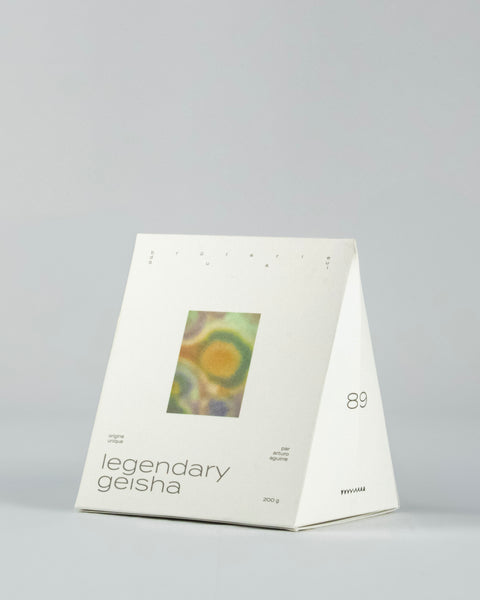
It is important to understand where the coffee comes from , how it is processed, to avoid mixing the concepts of the freshness of a coffee, with that of a bread, or a sushi roll. All the same, this notion is important because a coffee roasted more than a year ago, for example, will only be a pale reflection of what it was a week after roasting. You will therefore find, under our packaging, the roasting date of all our coffees.
 We are very excited about this new addition and it allows us to put into practice the old secret of the success of highgrade sausage (it's fresh because everyone eats it and everyone eats it because it's fresh. Or something like that).
Until now, we are shaking things up a bit because if the geeks of Montreal's "Anglo-French-sais-pu-trop third wave" have understood for a long time, the grocery store managers of Gaspésie are not too fond of the idea of putting an expiry date on a supposedly non-perishable tablet product... Well no, it's not an expiry date sir, it's a roasting date... We are therefore patient and do it, with a heart full of love , our work of evangelization.
And there you have it, our transparency policy:
- Roasting date
- Information on cafes
- Education
I don't do it to disgust my competitors (even if...) but to show you how passionate we are, that coffee is an extraordinary product and that the experience of drinking good coffee is within everyone's reach. This is not a snobbish product as the aluminum can company wants us to believe. So, I'm on fire today!