
Savoir

Extraction is the process by which water dissolves the aromatic compounds in coffee. Its balance directly influences the flavors in the cup, from acidity to bitterness. This article explains the principles of under-extraction and over-extraction, the factors that influence them, and the tools used to measure them.

La crema impressionne, mais elle ne garantit pas la qualité. Découvrez la différence entre une vraie crema d’espresso et une mousse artificielle.

It's a psychoactive stimulant that acts at the cellular level, altering our neurochemistry, influencing our performance, and, in high doses, can disrupt our nervous system. A dive into the biochemical intricacies of this substance that billions of humans consume every day.
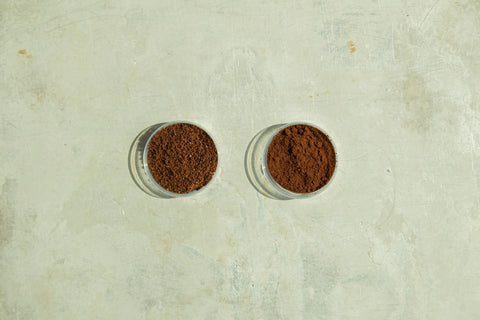
Often underestimated, grind is a key parameter in coffee extraction. It acts as a sensory and chemical lever, influencing the taste, aroma, and texture of each cup. Too fine or too coarse, it can completely transform your experience. Understanding grind is mastering the balance between science and pleasure.

The bitterness of coffee is intriguing and divisive: some shun it, others adore it. However, it doesn't come solely from caffeine. It stems primarily from roasting, chlorogenic acids, and extraction techniques.

Coffea arabica , native to Ethiopia, is the most widely cultivated coffee species for its aromatic qualities. Fragile yet rich in flavor, it grows at high altitudes and requires precise conditions. Its varieties and processing methods influence its taste. It faces significant climatic challenges today.

Typica, an ancient variety of Coffea arabica native to Ethiopia, spread to Yemen in the 17th century, then to Latin America. Valued for its floral aromas, sensory complexity, and specialty coffee qualities, it remains vulnerable to disease and depends on optimal climatic conditions.

Robusta coffee differs from Arabica in its robustness (as the name suggests), its higher caffeine content (between 2% and 4% compared to 1% to 1.5% for Arabica), and its ability to thrive in more rigorous growing conditions .
let's have a coffee!
lattitude : 48.104
longitude : - 66.129
200 route du quai,
carleton-sur-mer, qc, canada
G0C 1J0